

 Printing techniques vary from job to job and company-to-company, which can often lead to confusion when deciding which one is the best fit for your specific task at hand. Below we’ve outlined the basics of 4 popular printing methods and some facts about each to help you understand the differences and benefits.
Flexographic Printing
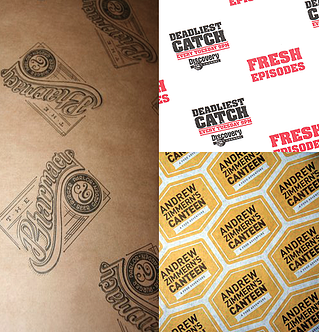
Flexographic printing, commonly known as flexo, is a relief printing process similar to letterpress that uses flexible rubber or soft plastic plates. It features a straightforward inking system and quick-drying inks. Flexo is highly versatile, allowing the inked surface to adapt to various substrates such as butcher paper, natural kraft, newsprint, chipboard, linerboard, and coated materials. It is regarded as the most adaptable and diverse printing method.
Key Advantages:
- Low viscosity inks enable fast drying, supporting high-speed, high-volume production
- Capable of printing with a wide range of ink types
- Durability of plates allows for millions of impressions
- Offers tighter control and repeatability
- Suitable for printing on both absorbent and non-absorbent substrates
- Capable of producing more colors per job
Gravure Printing
In gravure printing, an image is transferred to a substrate via a cylindrical metal plate with etched or engraved areas. These depressed regions hold the ink, which is then transferred to the paper. The etching process often involves laser technology. The metal plate is coated with ink and then wiped clean before printing.
Summary:
- Exceptionally high image quality with fine detail, vibrant and rich colors, and superior consistency over long, high-volume runs
- High initial costs, long setup times, and inflexibility, making it unsuitable for short-run or personalized jobs
Offset Printing
Offset printing involves transferring an inked image from a plate to a rubber blanket, then onto the printing surface.
Summary:
- Generally produces sharp, clean images
- Plates, especially anodized aluminum ones, can become sensitive and develop unwanted markings if not properly maintained
- Setup and plate production are time-consuming and expensive for short print runs
Inkjet Printing
Inkjet printing creates images by propelling tiny droplets of ink directly onto paper, typically controlled by a computer.
Summary:
- Ability to produce high-quality color prints, especially photographs, at an affordable initial cost.
- Slower production speeds
- Additional drying time can delay delivery
At Oren, our flexographic printing services include up to four colors with precise registration, the capability to print on both sides of web material, handling rolls up to 73 inches wide, unwinding and rewinding rolls up to 72 inches in diameter, and slitting during printing.
Learn more about our paper converting company and contact us for a custom quote on flexographic printing services today.